“The Daughter of Time” by Josephine Tey

“The Daughter of Time” by Josephine Tey

The Daughter of Time

by Josephine Tey
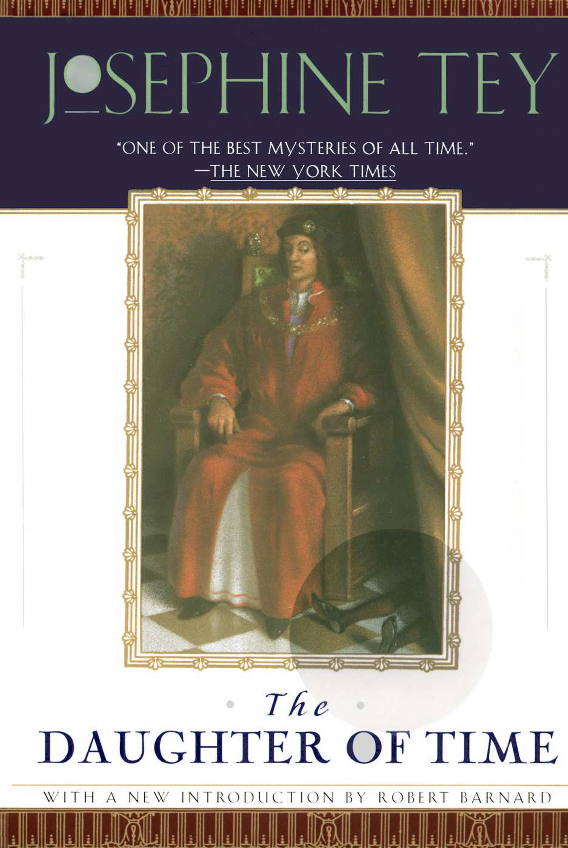
The Library Book Club meeting for this book was held Thursday, July 13th, 2017, at 6:30 in the entry foyer.

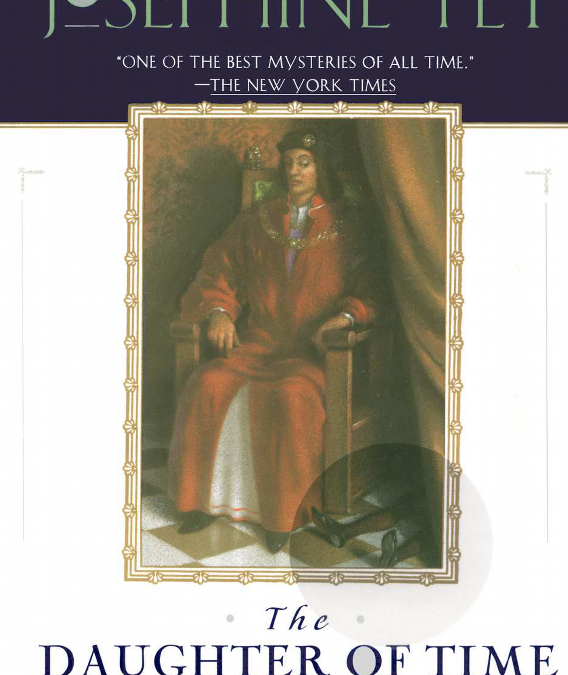
Scotland Yard Inspector Alan Grant is intrigued by a portrait of Richard III. Could such a sensitive face actually belong to a heinous villain — a king who killed his brother’s children to secure his crown? Grant seeks what kind of man Richard was and who in fact killed the princes in the tower.

Ratings and Reviews from the Librarians

Cathy rated it ★★★★.
The Teaching of Buddha

The Teaching of Buddha

The Teaching of Buddha

Anyone who has stayed in a hotel in Japan has probably seen a copy of The Teaching of Buddha. First published in 1925, the book was originally edited by Japanese scholars of Buddhism before WWII and distributed widely throughout Japan. The first English edition was published in 1934. The Reverend Dr. Yehan Numata brought out another English edition in 1962, and in 1966, after the establishment of the Bukkyo Dendo Kyokai (BDK) (Society for the Promotion of Buddhism), Dr. Numata assembled a committee of Buddhist scholars to substantially revise and edit a new English-Japanese edition. The Teaching of Buddha has undergone minor revisions and numerous reprintings since. It is now available in more than forty-two languages and over 8 million copies have been distributed and placed in hotel rooms in over fifty countries throughout the world.

The Teaching of Buddha is a collection of writings on the essence of Buddhism, selected and edited from the vast Buddhist canon, presented in a concise, easy-to-read, and nonsectarian format. It also includes a brief history of Buddhism, a listing of the source texts, a glossary of Sanskrit terms, and an index.

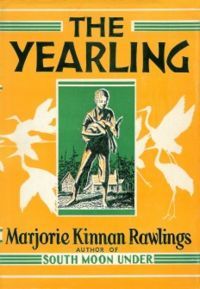
The Yearling by Marjorie Kinnan Rawlings

The Yearling by Marjorie Kinnan Rawlings

The Yearling

by Marjorie Kinnan Rawlings

The Library Book Club meeting for this book will be Thursday, September 21, 2017, at 6:30 in the entry foyer.

A limited number of book club reading copies will be available for checkout from the circulation desk about a month prior to the meeting.

Young Jody adopts an orphaned fawn he calls Flag and makes it a part of his family and his best friend. But life in the Florida backwoods is harsh, and so, as his family fights off wolves, bears, and even alligators, and faces failure in their tenuous subsistence farming, Jody must finally part with his dear animal friend.

Ratings and Reviews from the Librarians

Cathy rated it ★★★★

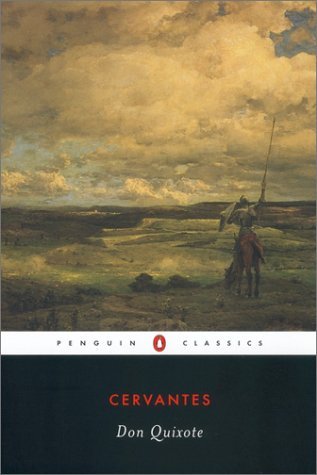
Don Quixote by Miguel de Cervantes Saavedra

Don Quixote by Miguel de Cervantes Saavedra

Don Quixote

by Manuel De Cervantes Saavedra

The Library Book Club meeting for this book was held Thursday, June 15, 2017, at 6:30 in the entry foyer.

Don Quixote has become so entranced by reading chivalric romances, that he determines to become a knight-errant himself. In the company of his faithful squire, Sancho Panza, his exploits blossom in all sorts of wonderful ways. While Quixote’s fancy often leads him astray – he tilts at windmills, imagining them to be giants – Sancho acquires cunning and a certain sagacity. Sane madman and wise fool, they roam the world together, and together they have haunted readers’ imaginations for nearly four hundred years.

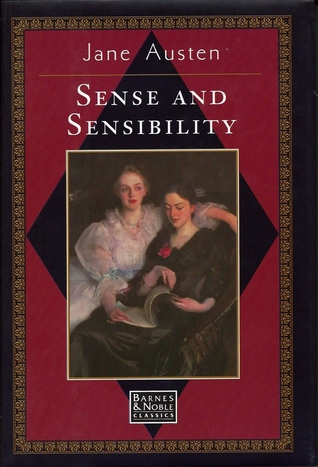
Sense and Sensibility by Jane Austen

Sense and Sensibility by Jane Austen

Sense and Sensibiity

by Jane Austen

The Library Book Club meeting for this book was held Thursday, May 18, 2017, at 6:30 in the entry foyer.

Marianne Dashwood wears her heart on her sleeve, and when she falls in love with the dashing but unsuitable John Willoughby she ignores her sister Elinor’s warning that her impulsive behaviour leaves her open to gossip and innuendo. Meanwhile Elinor, always sensitive to social convention, is struggling to conceal her own romantic disappointment, even from those closest to her. Through their parallel experience of love—and its threatened loss—the sisters learn that sense must mix with sensibility if they are to find personal happiness in a society where status and money govern the rules of love.

Ratings and Reviews from the Librarians

Cathy rated it ★★★★

Miranda rated it ★★★★

Patty rated it ★★★

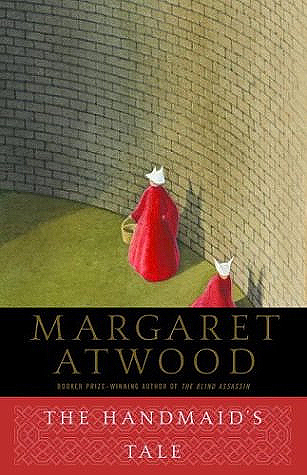
The Handmaid’s Tale by Margaret Atwood

The Handmaid’s Tale by Margaret Atwood

The Handmaid's Tale

by Margaret Atwood

The Library Book Club meeting for this book was held Thursday, March 16, 2017, at 6:30 in the entry foyer.

Book club reading copies were available for checkout from the circulation desk about a month prior to the meeting.

Offred is a Handmaid in the Republic of Gilead. She may leave the home of the Commander and his wife once a day to walk to food markets whose signs are now pictures instead of words because women are no longer allowed to read. She must lie on her back once a month and pray that the Commander makes her pregnant, because in an age of declining births, Offred and the other Handmaids are valued only if their ovaries are viable. Offred can remember the years before, when she lived and made love with her husband, Luke; when she played with and protected her daughter; when she had a job, money of her own, and access to knowledge. But all of that is gone now.

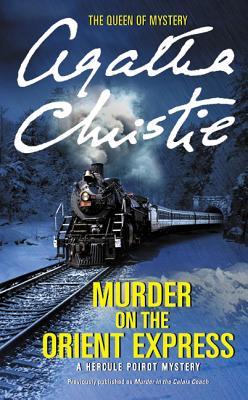
Murder on the Orient Express by Agatha Christie

Murder on the Orient Express by Agatha Christie

Murder on the Orient Express

by Agatha Christie

A Library Book Club meeting for this book was held February 16, 2017, as part of On the Same Page, the Madison Library District’s annual community reading program.

Starting mid-January, free copies of the book were available at the library while supplies lasted.

“The murderer is with us–on the train now . . .”

Just after midnight, the famous Orient Express is stopped in its tracks by a snowdrift. By morning, the millionaire Samuel Edward Ratchett lies dead in his compartment, stabbed a dozen times, his door locked from the inside. One of his fellow passengers must be the murderer.

Isolated by the storm, detective Hercule Poirot must find the killer among a dozen of the dead man’s enemies, before the murderer decides to strike again . . .

book 10 in the Hercule Poirot series

Ratings and Reviews from the Librarians

Cathy rated it ★★★★1/2 and said “Why have I never read Agatha Christie before? I think she eventually turned into one of those authors that I was “supposed to read” that were “good for me” and subconsciously I equated her with a chore read. Honestly, much of the beginning felt a little that way as all the evidence was collected, hashed, and then rehashed, and then . . . Wow! As the locomotive picked up steam so to speak it really went barreling down the line right to the last page where I literally gasped, then laughed, then clapped. I got to get my hands on more Christie.”

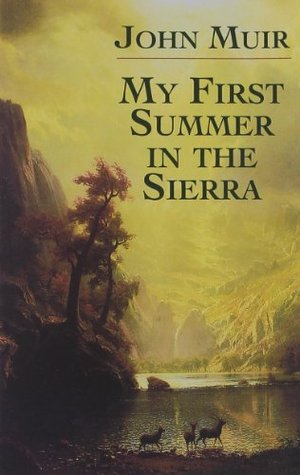
My First Summer in the Sierra by John Muir

My First Summer in the Sierra by John Muir

My First Summer in the Sierra

by John Muir

In the summer of 1869, John Muir, a young Scottish immigrant, joined a crew of shepherds in the foothills of California’s Sierra Nevada Mountains. The diary he kept while tending sheep formed the heart of this book and eventually lured thousands of Americans to visit Yosemite country.

First published in 1911, My First Summer in the Sierra incorporates the lyrical accounts and sketches he produced during his four-month stay in the Yosemite River Valley and the High Sierra. His record tracks that memorable experience, describing in picturesque terms the majestic vistas, flora and fauna, and other breathtaking natural wonders of the area.

Today Muir is recognized as one of the most important and influential naturalists and nature writers in America. This book, the most popular of the author’s works, will delight environmentalists and nature lovers with its exuberant observations.

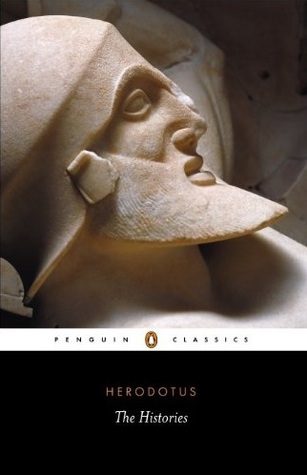
The Histories by Herodotus

The Histories by Herodotus

The Histories

by Herodotus

One of the masterpieces of classical literature, the Histories describes how a small and quarrelsome band of Greek city states united to repel the might of the Persian empire. But while this epic struggle forms the core of his work, Herodotus’ natural curiosity frequently gives rise to colorful digressions—a description of the natural wonders of Egypt; an account of European lake-dwellers; and far-fetched accounts of dog-headed men and gold-digging ants. With its kaleidoscopic blend of fact and legend, the Histories offers a compelling Greek view of the world of the fifth century BC.